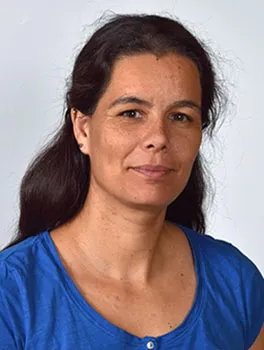
Ines Marques
Senior Research Assistant
University of Bern, CH
Ines Marques studied Ecology at the University of Lisbon. During her Master’s at Leiden University, she encountered the zebrafish and its remarkable capacity to regenerate the heart, which set her on a path toward molecular biology and the mechanisms of cardiac regeneration. She completed her PhD on disease models in zebrafish, also at Leiden, and then joined Nadia Mercader’s lab at the Spanish National Center for Cardiovascular Research (CNIC) in Madrid, where she deepened her work on heart development and regeneration and was awarded a Marie Skłodowska-Curie fellowship. When the Mercader group relocated to Bern, she helped establish the new laboratory and fish facility at the Institute of Anatomy.
Her research spans zebrafish heart development and regeneration. She has contributed to the discovery of a pro-regenerative macrophage population, the identification of neural crest-derived cardiomyocyte proliferation, and the finding that wt1 can drive cardiomyocytes toward an epicardial phenotype.
Talks and contributions
SGV Meeting 2026 · Scientific Programme
CHUV, Lausanne
- 24 November 2026 · 10:45Heart Regeneration in Zebrafish
Abstract
Cardiovascular diseases remain a leading cause of death worldwide. While in humans and other mammals a myocardial infarction leaves a permanent fibrotic scar in the heart, often leading to impaired heart function and, in many cases, death, other vertebrates, such as the zebrafish, can regenerate their heart after injury, replacing the scar with new myocardium and recovering cardiac function. Our research aims to understand the molecular and cellular mechanisms that enable heart regeneration in the zebrafish. We use cryoinjury of the adult zebrafish heart, a model that mimics key features of the injury response after myocardial infarction—localized tissue death and an immune response to clear cellular debris—but demonstrates regenerative properties such as activation of cell proliferation programs, transient deposition of scar tissue, and finally replacement of the scar by newly formed tissue.
Over the years we have investigated different aspects of this process. We identified key contributors to this process among several cell types. These include a pro-regenerative macrophage population, extracellular matrix-producing fibroblasts, and specific cardiomyocyte subpopulations. We also showed that metabolic rewiring can benefit regeneration. Finally, to reduce the use of animals, we established laser ablation as a method to induce injuries in zebrafish embryos. This embryonic model allows us to perform preliminary evaluations of candidate genes, reducing the number of adult animals needed to answer our research questions.