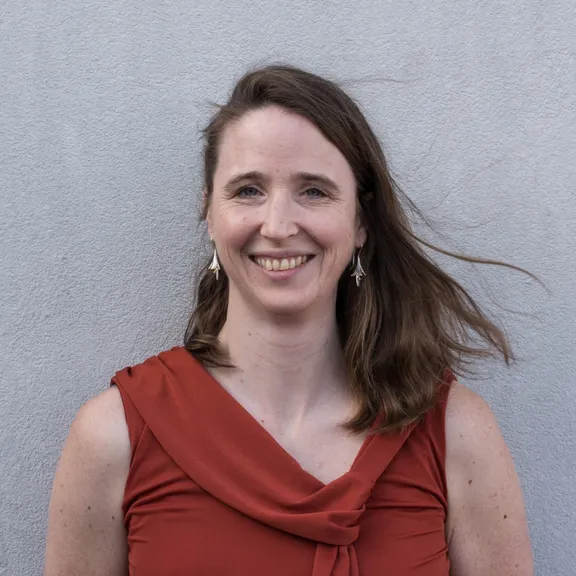
Liesbet Geris
University of Liège, BEKU Leuven, BE
Talks and contributions
SGV Meeting 2026 · Scientific Programme
CHUV, Lausanne
- 24 November 2026 · 15:40Computational Models and AI
Abstract
Research into the use of computer modeling and simulation in all areas of health and care has significantly increased over the past decades. It is known under many names, including in silico medicine, digital twins or virtual human twins. The common element they all share is the use of digital technologies, ranging from AI to mechanistic models, to answer specific problems related to prevention, diagnosis, treatment prediction and follow-up of the patient, or to design, optimize, de-risk and personalize medical therapies. While big strides have been taken in terms of technology development and regulatory science, many challenges remain that are holding back acceleration and uptake of the technologies in clinical practice. The Virtual Human Twins Initiative, kicked off by the European Commission in 2023, aims to jointly tackle those challenges. It started by bringing together the entire ecosystem: patients, citizens, healthcare providers, academia, industry, regulators, health technology assessment agencies and policy makers. In a joint effort, over 800 individuals from all across the world contributed to the creation of the vision for the VHT and the writing of its roadmap.
Though the primary focus of the VHT initiative is on improving human healthcare challenges, there are wide-ranging implications for laboratory animal science as well. In this talk, I will discuss a number of examples that demonstrate how Virtual Human Twin models can be used to reduce, refine and, in some cases, replace animal (and human) experimentation. From running longitudinal experiments where models allow us to link the quantities of interest with non-destructively measurable quantities, over the use of in silico screening experiments to optimize experimental conditions, to running in silico (clinical) trials. In addition, I will show examples of how these in silico tools are an integral part of biomedical research, allowing us to integrate observations from both in vitro and in vivo model systems across different time and length-scales, in order to gain deeper insight into biological phenomena and biomedical challenges.